AFM005P Multifunction Process Control Teaching System Process Control Trainer Educational Equipment Teaching EquipmentI. Product Overview
1.1 Overview
With the improvement of people's material living standards and the increasingly fierce market competition, the quality and function of the product have also developed to a higher grade. The process of manufacturing products has become more and more complicated. The tasks of controlling the process control as an important branch of industrial automation are also heavier.
In modern industrial control, process control technology is a long -distance branch. It was applied in the 1930s. Since the development of the process control technology, the development period has been experienced in control methods from manual control to automatic control. During the automatic control period, the process control system has gone through four development stages. They are: decentralized control phase, centralized control phase, distribution control phase and on -site bus control system stage. For decades, the industrial process control has achieved amazing development. Whether in the large -scale structural complex industrial production process, or in the transformation of traditional industrial process, process control technology has played a very good process of improving product quality and saving energy. Important role.
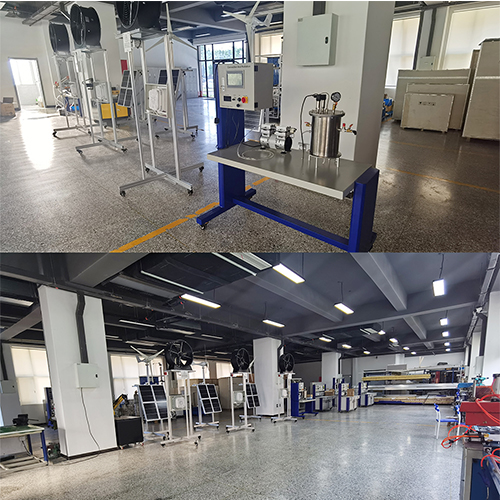
In order to better train students in related vocational colleges, we have designed and produced the multi -functional process control teaching system. The equipment has a variety of control process experiments and can meet basic experiments.
1.2 Features
(1) The product has excellent safety, and it is specifically manifested in the protection of electrical ground reliability and the protection of heating elements.
(2) The product adopts integrated and modular design. The equipment is not only small and the functional partitions are clear, making the experimental principles more clear and making learning easier.
(3) The product adopts excellent manufacturing materials, which can extend the service life and maintenance cycle of the equipment to the greatest extent.
(4) The product has a variety of experimental modules, which greatly enriches the diversity of experiments.
II. Performance Parameters
Input power supply: single phase AC110V 50 ~ 60Hz
Dimension: 1050mm*480mm*800mm
Weight: <45kg
Work conditions: ambient temperature -10 ℃ ~+40 ℃; relative humidity <85%(25 ℃)
III. Components List and Detailed Introduction
3.1 Main part
|
Number
|
Name
|
|
1
|
Stirring motor
|
|
2
|
Experimental container
|
|
3
|
Floating ball water level meter
|
|
4
|
PH measurement meter
|
|
5
|
Heater
|
|
6
|
TDS measuring meter
|
|
7
|
Mixer
|
|
8
|
Temperature Sensor
|
|
9
|
Water inlet of experimental containers
|
|
10
|
Drainage of the experimental container
|
|
11
|
Salt solution supply pump
|
|
12
|
Alkaline solution supply pump
|
|
13
|
Acid solution supply pump
|
|
14
|
Salt solution storage bucket
|
|
15
|
Alkaline solution storage bucket
|
|
16
|
Acid solution storage bucket
|
|
17
|
Electrical control panel
|
|
18
|
Drainage control valve
|
|
19
|
Water inlet control valve
|
|
20
|
Electric/pneumatic ratio valve
|
|
21
|
Pressure gauge
|
|
22
|
Frame body support foot
|
3.2 Electrical Parts
|
No.
|
Name
|
|
1
|
2P with a leakage protector's circuit breaker
|
|
2
|
Power Indicator
|
|
3
|
TDS display instrument and measurement interface
|
|
4
|
PH display instrument and measurement interface
|
|
5
|
Power interface and control switch
|
|
6
|
Emergency button
|
|
7
|
Multi -power output interface
|
|
8
|
NaAh current indicator table
|
|
9
|
Temperature value display instrument
|
|
10
|
Water leveler and heating rod power output interface
|
|
11
|
The mixer output power supply and measurement interface
|
|
12
|
The supply pump power interface of acid \ alkali \ salt solution
|
3.3 Equipment configuration list
|
No.
|
Name
|
Quantity
|
|
Component 1
|
Mixer
|
1
|
|
Component 2
|
Floating ball water level meter
|
1
|
|
Component 3
|
PH measurement meter
|
1
|
|
Component 4
|
Heater
|
1
|
|
Component 5
|
TDS measuring meter
|
1
|
|
Component 6
|
Temperature Sensor
|
1
|
|
Component 7
|
Solution supply pump
|
3
|
|
Component 8
|
Control valve
|
2
|
|
Component 9
|
Electric/pneumatic proportional adjustment valve
|
1
|
|
Component 10
|
Pressure gauge
|
1
|
|
Component 11
|
Solid storage barrel
|
3
|
|
Component 12
|
2P with a leakage protector's circuit breaker
|
1
|
|
Component 13
|
TDS display instrument
|
1
|
|
Component 14
|
PH display instrument
|
1
|
|
Component 15
|
Emergency button
|
1
|
|
Component 16
|
NaAh current indicator table
|
1
|
|
Component 17
|
Temperature value display instrument
|
1
|
3.4 Accessories
|
No.
|
Name
|
Quantity
|
|
Component 1
|
Power cable
|
1
|
|
Component 2
|
Red 2mm electrical cable
|
12
|
|
Component 3
|
Black 2mm electrical cable
|
18
|
|
Component 4
|
4mm electrical cable
|
4
|
|
Component 5
|
PH calculation liquid
|
3
|
|
Component 6
|
Transparent water pipe
|
1
|
|
Component 7
|
Pipe clip
|
4
|
3.5 Introduction to components
IV. Experimental List
Experiment 1 Demonstrate Multifunctional Process Control Teaching System's Electric Performance Vallean Control Experiment
Experiment 2 Demonstrate multi -functional process control teaching system pH measurement experiment
Experiment 3 Using multi -functional process control teaching system to study the factors that affect the change of pH value
Experiment 4 Demonstrate multi -functional process control teaching system TDS measurement experiment
Experimental 5 Using multi -functional process control teaching system to study factors that affect changes in TDS values
Experimental 6 Use Siemens PLC to use multi -functional processes to control the pH automatic matching experiment of the teaching system